How long do premium lenses last?
Premium lenses, also known as premium intraocular lenses (IOLs), are an increasingly popular option for those undergoing cataract surgery or lens replacement surgery. Designed to offer a broader range of vision correction, premium lenses help reduce the need for glasses after surgery. This post will explore the lifespan of premium lenses, how they work, and what to expect in the long term.
What are premium lenses?
Premium lenses are advanced intraocular lenses used to replace the eye’s natural lens during cataract surgery or refractive lens exchange. Unlike standard monofocal lenses, which only correct vision at one distance (typically for distance vision), premium lenses can correct multiple types of vision problems. These include presbyopia (difficulty seeing up close) and corneal astigmatism (blurred or distorted vision). Premium lenses are available in various forms, including multifocal, EDOF (extended depth of focus), and toric lenses, each designed to meet different visual needs.
The key benefit of premium lenses is that they offer clearer vision across a range of distances, meaning many patients can enjoy freedom from glasses or contact lenses. But how long do these lenses last?
Are premium lenses permanent?
The short answer is yes. Premium lenses are designed to be a permanent solution to vision problems. Once implanted, they are biocompatible and not biodegradable and so remain in place for life. These lenses are made from high-quality acrylic materials, which are highly durable and biocompatible with the human eye. This means that once they are inserted during surgery, they don’t degrade or wear out over time.
Unlike contact lenses, which need to be replaced regularly, or glasses, which may become outdated or damaged, premium lenses provide a lasting solution. In most cases, the lenses will remain effective for the rest of your life, offering clear vision without the need for replacements.
What about ageing?
One of the reasons why premium lenses are so effective and long-lasting is that they are not subject to the natural ageing process that affects the eye’s natural lens. As we age, our natural crystalline lenses become cloudy (cataracts) or lose flexibility to focus at near vision (presbyopia), which leads to vision problems. Premium lenses, on the other hand, are artificial and maintain their clarity and function over time. Once implanted, they are unaffected by age-related changes, ensuring stable vision for years to come.
Will I need another surgery?
In most cases, premium lenses are a once-in-a-lifetime procedure. The surgery itself involves removing your natural lens and replacing it with the premium lens, which remains in place permanently. You won’t need to have the lenses replaced later in life unless a rare complication arises, such as a dislocation of the lens, which would require repositioning or, in very rare cases, replacement.
However, it’s worth noting that while the premium lenses themselves do not need replacing, some patients may develop a condition known as posterior capsular opacification (PCO) months or years after surgery. PCO occurs when a thin layer of scar tissue forms in the capsular structure supporting the implanted lens, causing vision to become mildly cloudy again. This is easily treatable with an out-patient laser procedure called YAG laser posterior capsulotomy, which clears the cloudiness without affecting the lens itself.
The benefits of premium lenses?
The main benefit of premium lenses is that they offer greater freedom from glasses and contact lenses. Depending on the type of premium lens you choose, you may experience clear vision at all distances—near, intermediate, and far. Here are some specific benefits:
Multifocal Lenses
These lenses correct both near and far vision, allowing you to focus on objects at different distances without the need for bifocals or reading glasses.
Toric Lenses
If you have astigmatism, toric lenses are designed to correct this condition, improving both distance and near vision.
Reduced Need for Glasses
Many patients find that after having premium lenses implanted, they no longer need to wear glasses for most activities. This can be especially beneficial for people who are tired of relying on glasses for reading, driving, or using a computer.
Are there any risks?
As with any surgical procedure, there are potential risks and side effects with lens replacement surgery. Some patients may experience visual disturbances, such as halos, glare, or difficulty seeing in low light conditions. These side effects tend to diminish as the brain adjusts to the new lenses.
In rare cases, the lens may move out of position, requiring further surgery to correct. As mentioned earlier, posterior capsular opacification (PCO) may also develop, but this is easily treated with a YAG laser procedure.
Most patients, however, experience significant improvements in their vision and are very satisfied with the results. The key to success is choosing an experienced surgeon who can carefully assess your individual needs and recommend the best type of lens for you.
What to expect after surgery
The recovery process after lens replacement surgery is typically smooth and quick. Most patients notice an improvement in their vision within a few days, with full stabilisation occurring within a few weeks. You may be given eye drops to reduce inflammation and prevent infection, and it’s important to attend follow-up appointments to ensure your eyes are healing properly.
Your surgeon will give you detailed post-operative instructions, such as avoiding strenuous activity and protecting your eyes from bright light during the initial recovery period. Once fully healed, you should be able to enjoy your new vision without the need for glasses or contact lenses.
A long-lasting solution
Premium lenses provide a permanent solution for correcting vision problems such as cataracts, presbyopia, and astigmatism. Once implanted, they are designed to last a lifetime, offering stable and reliable vision correction without the need for replacement. While rare complications may occur, the majority of patients experience long-lasting benefits and a significantly improved quality of life.
If you’re considering lens replacement surgery or want to know more about how premium lenses can improve your vision, book a free video assessment today. Speak to a specialist and explore your options for achieving clearer vision that lasts a lifetime.
Are you suitable for vision treatments?
They aren’t suitable for everyone.
Find out if you could benefit from this life-changing surgery by taking the quick self-suitability quiz below:
Our most popular procedures
What our patients say…
★ ★ ★ ★ ★
“Had cataract surgery on both eyes simultaneously last week and, 7 days later, the vision is brilliant. I can see to read as well, including small print smaller than I expected! I can see car number plates at the end of the road. Everything was excellent, and I could not have wished for anything better.”
 Verified patient on Doctify
★ ★ ★ ★ ★
“My cataract surgery was a great experience. My vision is now brighter; overall, I felt informed and secure throughout, and I am glad I did it and definitely recommend Sharmina Khan. Everyone at the hospital was great, very professional, friendly, and treated me very nicely. During the surgery, I didn’t feel any pain at any time. The recovery was very easy and smooth.”
 Verified patient on Doctify
★ ★ ★ ★ ★
“I was very nervous about having cataract surgery, as I have other medical conditions in both eyes. Ms. Khan allayed all of my fears and explained everything in detail to me. Now that both surgeries are completed, I couldn’t be more pleased with the results. I’m seeing things I’ve not been able to see properly in years. Amazing!”
 Verified patient on Doctify
★ ★ ★ ★ ★
“Ms. Sharmina Khan is an outstanding eye consultant. She took the time to listen attentively to my concerns and provided thoughtful, easy-to-understand explanations. Her depth of knowledge and ability to address my questions left me thoroughly satisfied with her services. I highly recommend Ms. Sharmina Khan to anyone seeking expert eye care and guidance.”
 Verified patient on Doctify
★ ★ ★ ★ ★
“I had cataract surgery in both eyes. The procedure was painless, easy to understand, and swift. My anxiety levels were very low, and recovery was quick and easy. I was just so relaxed. My vision was like being Wonder Woman. It was so clear, and it was like someone had cleaned a window. Now, my vision is fine for reading, computer use, and using a sewing machine.”
 Verified patient on Doctify
★ ★ ★ ★ ★
“Extremely happy with vision following cataract surgery. I wish I had it done sooner. The colors I am experiencing, I didn’t know existed. The experience was really good; it wasn’t much painful. I really enjoyed the sandwiches afterward. When I got home, I saw every little mark on the walls and now am cleaning up!”
 Verified patient on Doctify
★ ★ ★ ★ ★
“6/5. Incredibly impressed with Miss Khan’s bedside manner and operation and consultation. I have had the Synergy toric lens and have experienced a dramatic increase in distance vision. Now, I am able to read stuff on the television perfectly, and reading small print, I can now read the back of a tin of beans!”
 Verified patient on Doctify
★ ★ ★ ★ ★
“Miss Khan was very professional, and both my eyes had trifocal intra-ocular lens implants (toric in the left). The risks and benefits were explained to my satisfaction, and I was very nervous. However, the procedure and the recovery were painless. I now have perfect unaided vision in both eyes and would recommend Miss Khan, 10 out of 10.”
 Verified patient on Doctify
★ ★ ★ ★ ★
“I’m so pleased I sought Sharmina Khan’s help. My dry eye problem was debilitating. I turned up to my appointment in a very worried state and left reassured. My eyes are now vastly better. I feel in good hands. Thank you!”
 Verified patient on Doctify
★ ★ ★ ★ ★
“I have had Lipiflow a few times now, and I couldn’t do without it because it really gets rid of my gritty and sore eyes for months at a time. Lipiflow has helped me go back to doing normal things without getting frustrated, like driving, tolerating air conditioning, generally tolerating different humidity levels, and not feeling like I need to use eye drops all the time. I would highly recommend it.”
 Verified patient on Doctify
We have replaced the images of real patients who provided these testimonials to protect their privacy.


Sharmina Khan
MBBS MSc FHEA FRCOphth
DipCRS CertLRS,
Consultant Eye Surgeon
Hi, I’m Sharmina Khan
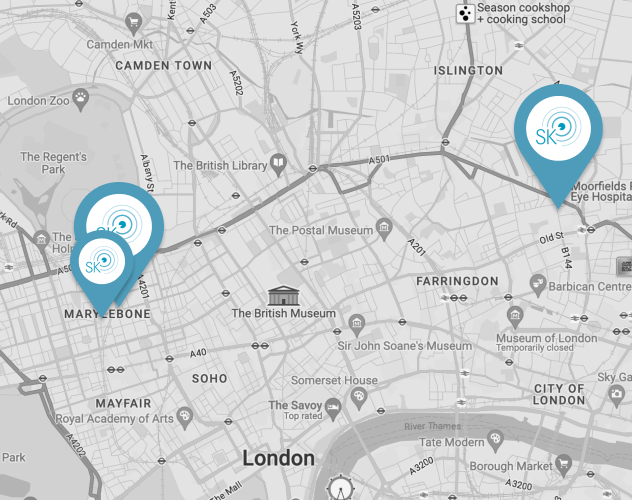
I am based in Marylebone, London as a specialist Consultant Cataract & Lens surgeon where I can help you be rid of glasses. In our premium Dry Eye clinic we deliver top of the range office based treatments such as Optlight IPL, Lipiflow (and more) to help you silent sufferers with dry eye and blepharitis associated with rosacea, menopause, prolonged screen time due work and play!
I started out as a Senior House Officer at Moorfields Eye Hospital, London in 2002 and then worked may way to where we are now. As a result I have carried out over 7000+ cataract/lens procedures across both my private and NHS practices at the world renowned Moorfields Eye NHS & Private Hospitals. I am proud that our efforts mean the profits from Moorfields Private are invested back into Moorfields research and Moorfields NHS!
We have options so that you can achieve your dreams of better vision and more, according to your lifestyle needs.