Can I do laundry after cataract surgery?
Cataract surgery is a quick and safe procedure, but taking care of your eyes during recovery is essential. One common question many patients ask is:
“Can I do laundry after cataract surgery?”
At Sharmina Khan’s eye clinic, we want to make sure your recovery is smooth and risk-free. While household chores might seem harmless, some activities—including laundry—can increase your risk of infection or strain your eyes in the first few days after surgery.
Let’s break down when it’s safe to get back to doing laundry and how to protect your eyes while recovering.
Can You Do Laundry Right After Cataract Surgery?
Right after cataract surgery, your eyes are in a sensitive healing phase. The first 24–48 hours are crucial for proper recovery. During this time, it’s best to avoid laundry and other strenuous household chores.
Why?
- Lifting Heavy Laundry Baskets – Straining or bending down increases eye pressure, which could impact healing.
- Exposure to Dust & Lint – Tiny particles from clothing can irritate your eyes.
- Risk of Water or Soap Getting in Your Eyes – If you’re hand-washing, splashes of detergent can cause discomfort.
For the first few days, it's best to rest and let someone else handle the laundry if possible.
When can you resume doing laundry?
After 3–5 Days:
- Light laundry tasks (folding, sorting) are fine as long as you avoid heavy lifting.
- Be cautious of dust and lint, as your eyes are still healing.
After 1 Week:
- You can start washing clothes again, but avoid bending over too much or straining.
- If hand-washing, be extra careful to keep water and soap out of your eyes.
After 2 Weeks:
- Most patients can return to normal household chores, including full laundry tasks.
- At this stage, vision is clearer, and the risk of infection is lower.
Tips for doing laundry safely after cataract surgery
- Use a gentle detergent – Avoid harsh chemicals that may irritate your eyes.
- Avoid dust & lint – Wear sunglasses indoors if lint is causing irritation.
- Do small loads – Lifting heavy laundry baskets increases pressure in your eyes.
- Take breaks – If your eyes feel tired, rest and avoid overexertion.
Cataract surgery is life-changing, but recovery is just as important. If you're unsure about what activities you can do after surgery, book a free video assessment.
Are you suitable for vision treatments?
They aren’t suitable for everyone.
Find out if you could benefit from this life-changing surgery by taking the quick self-suitability quiz below:
Our most popular procedures
What our patients say…
★ ★ ★ ★ ★
“Had cataract surgery on both eyes simultaneously last week and, 7 days later, the vision is brilliant. I can see to read as well, including small print smaller than I expected! I can see car number plates at the end of the road. Everything was excellent, and I could not have wished for anything better.”
 Verified patient on Doctify
★ ★ ★ ★ ★
“My cataract surgery was a great experience. My vision is now brighter; overall, I felt informed and secure throughout, and I am glad I did it and definitely recommend Sharmina Khan. Everyone at the hospital was great, very professional, friendly, and treated me very nicely. During the surgery, I didn’t feel any pain at any time. The recovery was very easy and smooth.”
 Verified patient on Doctify
★ ★ ★ ★ ★
“I was very nervous about having cataract surgery, as I have other medical conditions in both eyes. Ms. Khan allayed all of my fears and explained everything in detail to me. Now that both surgeries are completed, I couldn’t be more pleased with the results. I’m seeing things I’ve not been able to see properly in years. Amazing!”
 Verified patient on Doctify
★ ★ ★ ★ ★
“Ms. Sharmina Khan is an outstanding eye consultant. She took the time to listen attentively to my concerns and provided thoughtful, easy-to-understand explanations. Her depth of knowledge and ability to address my questions left me thoroughly satisfied with her services. I highly recommend Ms. Sharmina Khan to anyone seeking expert eye care and guidance.”
 Verified patient on Doctify
★ ★ ★ ★ ★
“I had cataract surgery in both eyes. The procedure was painless, easy to understand, and swift. My anxiety levels were very low, and recovery was quick and easy. I was just so relaxed. My vision was like being Wonder Woman. It was so clear, and it was like someone had cleaned a window. Now, my vision is fine for reading, computer use, and using a sewing machine.”
 Verified patient on Doctify
★ ★ ★ ★ ★
“Extremely happy with vision following cataract surgery. I wish I had it done sooner. The colors I am experiencing, I didn’t know existed. The experience was really good; it wasn’t much painful. I really enjoyed the sandwiches afterward. When I got home, I saw every little mark on the walls and now am cleaning up!”
 Verified patient on Doctify
★ ★ ★ ★ ★
“6/5. Incredibly impressed with Miss Khan’s bedside manner and operation and consultation. I have had the Synergy toric lens and have experienced a dramatic increase in distance vision. Now, I am able to read stuff on the television perfectly, and reading small print, I can now read the back of a tin of beans!”
 Verified patient on Doctify
★ ★ ★ ★ ★
“Miss Khan was very professional, and both my eyes had trifocal intra-ocular lens implants (toric in the left). The risks and benefits were explained to my satisfaction, and I was very nervous. However, the procedure and the recovery were painless. I now have perfect unaided vision in both eyes and would recommend Miss Khan, 10 out of 10.”
 Verified patient on Doctify
★ ★ ★ ★ ★
“I’m so pleased I sought Sharmina Khan’s help. My dry eye problem was debilitating. I turned up to my appointment in a very worried state and left reassured. My eyes are now vastly better. I feel in good hands. Thank you!”
 Verified patient on Doctify
★ ★ ★ ★ ★
“I have had Lipiflow a few times now, and I couldn’t do without it because it really gets rid of my gritty and sore eyes for months at a time. Lipiflow has helped me go back to doing normal things without getting frustrated, like driving, tolerating air conditioning, generally tolerating different humidity levels, and not feeling like I need to use eye drops all the time. I would highly recommend it.”
 Verified patient on Doctify
We have replaced the images of real patients who provided these testimonials to protect their privacy.


Sharmina Khan
MBBS MSc FHEA FRCOphth
DipCRS CertLRS,
Consultant Eye Surgeon
Hi, I’m Sharmina Khan
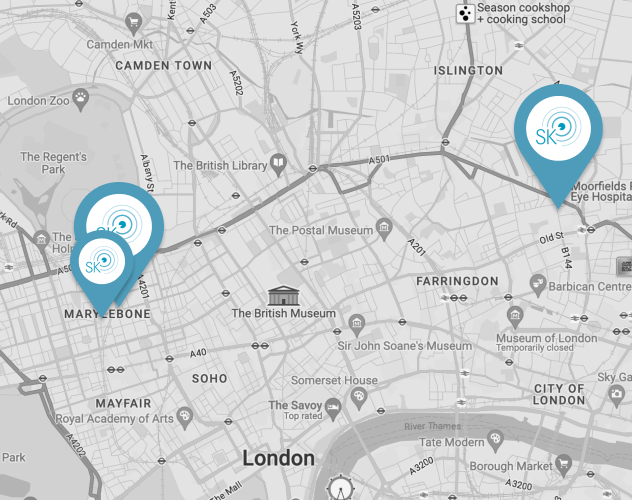
I am based in Marylebone, London as a specialist Consultant Cataract & Lens surgeon where I can help you be rid of glasses. In our premium Dry Eye clinic we deliver top of the range office based treatments such as Optlight IPL, Lipiflow (and more) to help you silent sufferers with dry eye and blepharitis associated with rosacea, menopause, prolonged screen time due work and play!
I started out as a Senior House Officer at Moorfields Eye Hospital, London in 2002 and then worked may way to where we are now. As a result I have carried out over 7000+ cataract/lens procedures across both my private and NHS practices at the world renowned Moorfields Eye NHS & Private Hospitals. I am proud that our efforts mean the profits from Moorfields Private are invested back into Moorfields research and Moorfields NHS!
We have options so that you can achieve your dreams of better vision and more, according to your lifestyle needs.